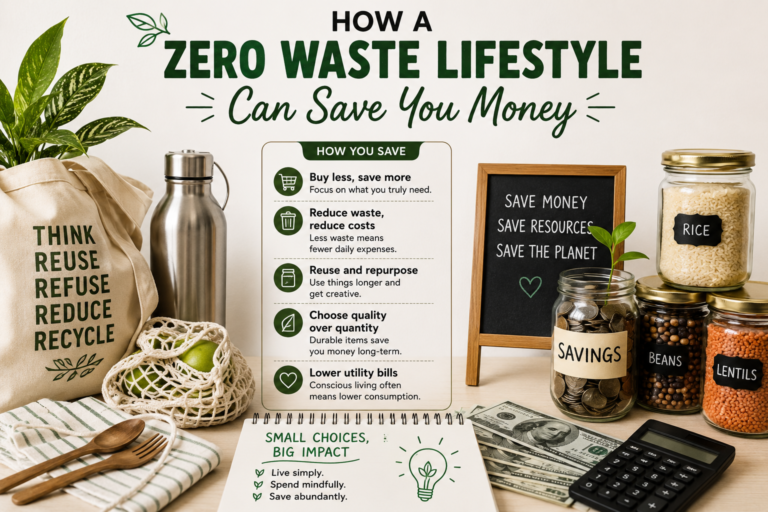
Living a zero waste lifestyle is often associated with protecting the environment, but one of its biggest benefits is something many people overlook: saving money. By reducing waste, making smarter purchasing decisions, and reusing what you already own, you can significantly cut your monthly expenses while living more sustainably.
Whether you’re looking to reduce your environmental footprint or simply stretch your budget, adopting zero waste habits can have a lasting positive impact on both your wallet and the planet.
What Is a Zero Waste Lifestyle?
A zero waste lifestyle focuses on minimizing the amount of trash sent to landfills by following the principles of Reduce, Reuse, Recycle, Rot (compost), and Refuse. Instead of constantly buying disposable products, zero waste encourages thoughtful consumption and making the most of existing resources.
While achieving absolutely zero waste isn’t realistic for everyone, even small changes can result in meaningful financial savings.
1. Buy Less and Spend Less
One of the core principles of zero waste is reducing unnecessary purchases.
Before buying something new, ask yourself:
- Do I really need this?
- Can I borrow it?
- Can I repair something I already own?
- Can I buy it second-hand?
Avoiding impulse purchases naturally reduces spending. Many people discover they save hundreds or even thousands of dollars annually simply by becoming more intentional consumers.
Money-Saving Tip
Use the 30-day rule for non-essential purchases. If you still want the item after 30 days, buy it. Otherwise, you’ve likely saved money.
2. Save Money with Reusable Products
Disposable products seem inexpensive individually, but their recurring costs add up over time.
Switching to reusable alternatives helps eliminate repeated purchases.
Examples include:
- Reusable water bottles
- Stainless steel coffee cups
- Cloth shopping bags
- Beeswax food wraps
- Reusable food containers
- Cloth napkins
- Refillable cleaning bottles
Although these items may require a higher upfront investment, they often pay for themselves within months.
Example Savings
Instead of buying bottled water daily:
- $2 per bottle × 365 days = $730 annually
Using a reusable bottle reduces this cost dramatically.
3. Reduce Grocery Bills
Food waste costs the average household hundreds of dollars every year.
Zero waste shopping encourages:
- Meal planning
- Buying only what you need
- Proper food storage
- Using leftovers creatively
These habits reduce spoiled food and unnecessary grocery trips.
Practical Tips
- Make a shopping list.
- Check your pantry before shopping.
- Freeze leftovers.
- Store fruits and vegetables properly.
- Cook with ingredients already at home.
Less food waste means lower grocery expenses.
4. Buy in Bulk
Buying pantry staples in bulk often costs less per unit than purchasing smaller packages.
Items commonly purchased in bulk include:
- Rice
- Beans
- Pasta
- Oats
- Nuts
- Flour
- Spices
Many zero waste stores even allow customers to bring reusable containers, eliminating packaging waste while reducing costs.
5. Repair Instead of Replace
Modern consumer culture encourages replacing broken items rather than fixing them.
A zero waste mindset values repairs.
Examples include:
- Sewing torn clothing
- Repairing furniture
- Fixing electronics
- Replacing appliance parts
- Sharpening kitchen knives
Learning basic repair skills can save hundreds of dollars each year.
6. Save Money Through DIY Products
Many household products are surprisingly easy to make at home.
Popular DIY options include:
- Multi-purpose cleaners
- Laundry detergent
- Air fresheners
- Hand soap
- Beauty products
Simple ingredients like vinegar, baking soda, lemon, and castile soap can replace multiple commercial cleaning products.
Homemade alternatives are often cheaper and contain fewer harmful chemicals.
7. Lower Utility Bills
A zero waste lifestyle naturally promotes energy conservation.
Simple habits include:
- Turning off lights
- Using LED bulbs
- Air-drying clothes
- Shortening showers
- Fixing water leaks
- Using reusable towels instead of paper towels
These small changes gradually reduce electricity and water bills.
8. Shop Second-Hand
Buying used items is one of the fastest ways to save money.
Consider purchasing second-hand:
- Clothing
- Furniture
- Kitchenware
- Books
- Children’s toys
- Home décor
- Sporting equipment
Thrift stores, online marketplaces, and community exchanges often offer quality products at a fraction of retail prices.
9. Avoid Single-Use Items
Single-use products create ongoing expenses.
Examples include:
- Plastic cutlery
- Disposable razors
- Paper towels
- Coffee pods
- Plastic food containers
- Disposable cleaning wipes
Replacing them with durable alternatives reduces recurring costs.
10. Compost Kitchen Waste
Composting food scraps helps reduce household waste while producing nutrient-rich compost for gardens.
Benefits include:
- Reduced garbage disposal costs
- Less need for chemical fertilizers
- Healthier garden soil
- Lower landfill waste
If you grow vegetables or flowers, homemade compost can replace expensive commercial fertilizers.
11. Extend the Life of Your Clothing
Fast fashion encourages frequent purchases.
Zero waste living promotes:
- Washing clothes less often
- Air drying
- Repairing small tears
- Proper storage
- Buying quality over quantity
Higher-quality clothing lasts longer and reduces replacement costs.
12. Cook More Meals at Home
Restaurant meals and takeout generate significant packaging waste and usually cost far more than home-cooked meals.
Preparing meals at home helps:
- Reduce food packaging
- Lower food expenses
- Improve nutrition
- Minimize waste
Even replacing two restaurant meals per week with home cooking can save hundreds of dollars annually.
13. Borrow Instead of Buying
Many items are rarely used after purchase.
Examples include:
- Power tools
- Party decorations
- Camping gear
- Ladders
- Specialty kitchen appliances
Borrowing from friends, neighbors, or local libraries saves money while reducing unnecessary consumption.
14. Sell What You No Longer Need
A zero waste lifestyle also encourages keeping useful items in circulation.
Sell unwanted:
- Electronics
- Furniture
- Clothing
- Books
- Exercise equipment
- Home accessories
Decluttering your home can generate extra income while preventing usable items from ending up in landfills.
15. Develop Smarter Spending Habits
Perhaps the greatest financial benefit of zero waste living is the mindset it creates.
Instead of constantly asking:
“What should I buy next?”
You begin asking:
“How can I use what I already have?”
This shift leads to:
- Better budgeting
- Less impulse spending
- Higher savings
- Greater financial security
Common Myths About Zero Waste
Myth 1: It’s Expensive
Many people assume zero waste requires buying expensive eco-friendly products.
In reality, the cheapest option is often using what you already own.
Myth 2: You Need Fancy Products
You don’t need a complete set of sustainable products to get started.
Simple habits like refusing disposable items and reducing unnecessary purchases make a big difference.
Myth 3: It Has to Be Perfect
Zero waste is about progress, not perfection. Every small improvement helps reduce waste and save money.
Getting Started with Zero Waste on a Budget
If you’re new to zero waste, begin with these simple steps:
- Carry a reusable water bottle.
- Bring reusable shopping bags.
- Plan weekly meals.
- Buy second-hand when possible.
- Repair items before replacing them.
- Reduce impulse shopping.
- Compost food scraps if possible.
- Choose reusable household products gradually.
There’s no need to overhaul your lifestyle overnight. Small, consistent changes lead to significant long-term savings.
Final Thoughts
A zero waste lifestyle is about more than reducing trash—it’s about making intentional choices that benefit both your finances and the environment. By buying less, reusing more, avoiding disposable products, reducing food waste, and embracing simple sustainable habits, you can lower everyday expenses while living a more mindful life.
The journey toward zero waste doesn’t have to be perfect. Every reusable item, repaired product, and thoughtful purchase contributes to a healthier planet and a healthier bank account. Start with one small change today, and over time you’ll discover that living with less waste can truly help you save more money.