We live in an age of convenience—plastic packaging, disposable products, and single-use items surround us. But this convenience comes at a cost. Every year, billions of tons of waste end up in landfills, oceans, and incinerators, polluting our planet and depleting its resources.
The good news? You don’t need to be perfect to make a difference. A zero-waste lifestyle isn’t about achieving absolute zero waste; it’s about making conscious choices to minimize the amount of trash you generate. By implementing practical strategies at home, you can significantly reduce your environmental footprint while saving money and living more intentionally.
Let’s explore how to transform your household into a waste-reducing machine.
1. Start by Understanding Your Waste
Before you can reduce waste, you need to know what you’re throwing away.
Action items:
- Spend a week tracking everything that goes into your trash. Keep a simple log of items and categories.
- Identify your biggest waste culprits (packaging, food scraps, old clothing, single-use items).
- Notice patterns—do you buy more packaged goods on certain days? Are there products you use once and discard?
Understanding your waste patterns empowers you to make targeted changes. You might discover that most of your waste comes from food packaging, or that you’re tossing out clothes that could be repurposed. This awareness is the first step to change.
2. Master the 5 R’s Framework
The zero-waste movement operates on the hierarchy of the 5 R’s. Follow them in order:
Refuse
Say no to things you don’t need. This includes single-use plastics, promotional items, free junk, and products with excessive packaging. A polite “no thank you” is powerful. When you’re at the grocery store, refuse plastic bags and opt for reusable ones. Refuse straws, napkins, and condiments you won’t use.
Reduce
Consume less intentionally. Buy only what you need, choose quality over quantity, and opt for multi-purpose items. Instead of three single-purpose gadgets, invest in one versatile tool.
Reuse
Extend the life of items through creative reuse. Glass jars become storage containers, old t-shirts transform into cleaning rags, and worn-out furniture gets a fresh coat of paint. Thrift stores, hand-me-downs, and buy-nothing groups are goldmines for secondhand treasures.
Recycle
Only after refusing, reducing, and reusing should you recycle. Check your local recycling guidelines and ensure you’re actually recycling correctly. Contaminated recycling (non-recyclables mixed in) can spoil entire batches.
Rot (Compost)
Organic waste like food scraps and yard debris shouldn’t go to landfills. Composting returns nutrients to the soil and diverts significant waste. Start a compost bin in your yard, use a countertop composter, or join a community composting program.
3. Eliminate Single-Use Plastics
Single-use plastics are among the most damaging waste products. They persist in the environment for centuries and fragment into microplastics that contaminate food chains.
Easy swaps to make:
| Single-Use Item | Zero-Waste Alternative |
|---|---|
| Plastic bags | Reusable cloth tote bags, mesh bags |
| Plastic wrap | Beeswax wraps, glass containers with lids |
| Paper towels | Cloth rags and washable towels |
| Plastic bottles | Stainless steel or glass water bottles |
| Plastic straws | Bamboo, stainless steel, or glass straws |
| Disposable coffee cups | Reusable travel mug |
| Plastic cutlery | Metal or wooden utensils |
| Cotton pads | Reusable makeup remover pads |
| Plastic toothbrushes | Bamboo toothbrushes |
| Plastic bags (produce) | Reusable mesh bags |
Start with one or two swaps that fit your lifestyle, then gradually incorporate more.
4. Rethink Your Kitchen
The kitchen is often the biggest source of household waste. Here’s how to transform it:
Meal Planning & Food Storage
- Plan meals to reduce food waste
- Store produce properly to extend freshness
- Use glass containers instead of plastic wrap
- Keep an organized freezer to track what you have
Shopping Smart
- Buy in bulk using your own containers
- Choose loose produce instead of packaged
- Buy whole foods and cook from scratch
- Choose products with minimal or recyclable packaging
- Support local farmers markets where you can bring containers
Composting
- Keep a small countertop compost container
- Collect food scraps (vegetable peels, eggshells, coffee grounds)
- Compost regularly in a bin or community program
- Use finished compost for indoor and outdoor plants
5. Create a Zero-Waste Bathroom
Bathrooms are filled with single-use items. Here’s how to green it:
- Shampoo & Conditioner: Switch to bar shampoos and conditioners (they last 2-3 times longer than liquid)
- Soap: Opt for bar soap instead of liquid
- Toothbrush: Use bamboo toothbrushes (and compost the handle when worn)
- Deodorant: Buy in aluminum or glass containers, or make your own
- Menstrual Products: Switch to menstrual cups, cloth pads, or period underwear
- Cotton Pads: Use reusable alternatives
- Toilet Paper: Choose brands made from recycled paper
- Medications: Ask pharmacies not to use excess packaging
6. Reduce Clothing & Textile Waste
The fashion industry generates massive amounts of waste. Be intentional with clothing:
- Buy less, choose quality pieces that last
- Swap clothes with friends and family
- Shop secondhand at thrift stores and online platforms
- Repair clothing instead of replacing it
- Donate or sell items you no longer wear
- Use old clothes as rags before discarding
- Look for sustainable brands using eco-friendly materials
7. Manage Household Products Sustainably
Many household products come in excess packaging or aren’t recyclable.
Solutions:
- Cleaning: Make your own cleaners with vinegar, baking soda, and essential oils
- Laundry: Use soap nuts, laundry strips, or concentrated detergent
- Packaging: Buy refillable products or shop at zero-waste stores
- Electronics: Repair devices or recycle responsibly through e-waste programs
- Batteries & Chargers: Use rechargeable options
8. Set Up a Recycling & Composting System
Even with the best efforts, some recycling and composting will happen. Make it easy:
- Recycling Station: Create a labeled area for recyclables
- Compost Bin: Keep one in your kitchen for daily scraps
- Trash Can: A small container for true trash (unsalvageable items)
- Research: Know your local recycling guidelines
- Hazardous Waste: Find proper disposal sites for items like paint and electronics
9. Get Your Family on Board
Lifestyle changes stick better when everyone participates:
- Involve children in composting and recycling
- Make it a game or challenge
- Lead by example rather than lecturing
- Celebrate milestones together
- Share the why—help family understand the environmental impact
10. Practice Mindful Consumption
The most sustainable item is one you don’t buy.
- Before purchasing, ask: Do I need this? Will it last? Is it made ethically?
- Wait 30 days before buying non-essentials
- Borrow instead of buying items you’ll rarely use
- Buy secondhand first
- Choose experiences over things
- Unsubscribe from marketing emails that tempt you
Common Challenges & Solutions
Challenge: My local store doesn’t sell package-free items. Solution: Order online from zero-waste retailers, shop at farmers markets, or join a community co-op. Advocate for change by requesting bulk options at your store.
Challenge: My family thinks I’m being extreme. Solution: Focus on benefits beyond environmentalism—saving money, healthier foods, simpler life. Let results speak for themselves.
Challenge: Changing everything feels overwhelming. Solution: Pick one category (kitchen, bathroom, shopping) and master it before moving on. Progress over perfection.
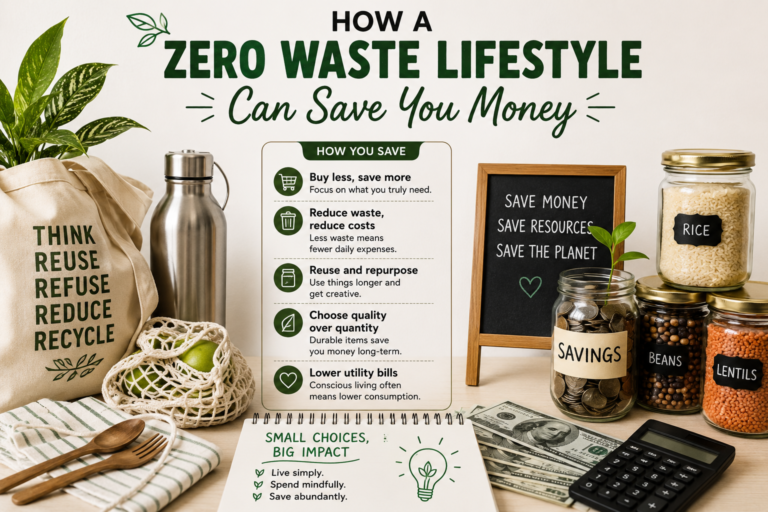
Challenge: Zero-waste products are more expensive. Solution: Many are investments that save money long-term. Bar soaps last longer, reusable bags eliminate plastic bag purchases, and bulk buying is cheaper.
The Real Impact
You might think one person’s waste reduction is insignificant. But consider this: if 100 households each eliminate just one kg of waste per week, that’s 5,200 kg diverted from landfills annually. Multiply that by thousands of people making conscious choices, and the impact becomes substantial.
Beyond the numbers, a zero-waste lifestyle cultivates intentionality. You start questioning consumption, appreciating quality, and recognizing your power as a consumer. You become part of a movement pushing corporations toward sustainable practices.
Getting Started Today
You don’t need to overhaul your entire life overnight. Start with these three actions:
- Refuse one single-use item you encounter today
- Make one sustainable swap this week
- Track your waste to identify your next focus area
A zero-waste lifestyle isn’t about perfection—it’s about progress. Every item you keep out of the landfill matters. Every conscious choice ripples outward, inspiring others and signaling to businesses that there’s a market for sustainable alternatives.
Your home can be the foundation of a waste-free life. Start today, and together, we can build a more sustainable future.