What Is a Zero-Waste Lifestyle?
A zero-waste lifestyle is not about producing absolutely no trash—that’s nearly impossible in today’s world. Instead, it’s about making conscious choices to reduce waste as much as possible and minimize your environmental footprint. Think of it as shifting from a “throwaway culture” to a circular way of living, where everything has a purpose and nothing goes to waste unnecessarily. It’s less about perfection and more about progress.
At its core, zero waste encourages mindful consumption. You start questioning everyday habits—why do we use plastic bags once and throw them away? Why do we buy things we barely use? These small questions spark a big transformation. Instead of blindly consuming, you begin to take control of your lifestyle, making choices that align with sustainability and responsibility.
In 2026, the urgency of adopting sustainable habits is greater than ever. Global waste production continues to rise, with millions of tons of plastic entering oceans each year. Landfills are overflowing, and natural resources are being depleted at an alarming rate. A zero-waste lifestyle is one of the most effective ways individuals can contribute to solving these problems without waiting for governments or corporations to act.
Benefits of Living Zero-Waste
Switching to a zero-waste lifestyle comes with powerful benefits that go beyond helping the planet. One of the most noticeable advantages is the positive environmental impact. By reducing waste, you decrease pollution, conserve natural resources, and help protect ecosystems. Every plastic bottle you avoid and every reusable item you use contributes to a healthier Earth.
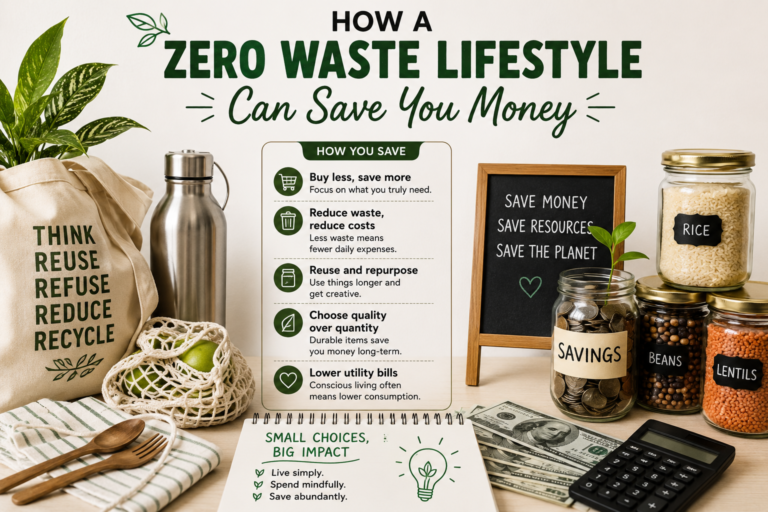
Another surprising benefit is saving money. It might seem like sustainable products are expensive, but the opposite is often true. When you stop buying disposable items repeatedly, you naturally cut down on spending. For example, investing in a reusable water bottle or cloth shopping bags eliminates the need for constant repurchases. Over time, these small savings add up significantly.
There’s also a mental and emotional benefit. Living with less clutter and more intention can bring a sense of clarity and control. You become more mindful of what you own and why you own it. It’s like decluttering not just your home, but your life. Many people find that adopting a zero-waste lifestyle leads to reduced stress and increased satisfaction.
The 5 R’s of Zero Waste
The foundation of zero waste is built on the 5 R’s—a simple yet powerful framework that guides sustainable living.
Refuse
Refusing is the first and most important step. It means saying no to things you don’t need, like plastic straws, free promotional items, or excessive packaging. This step prevents waste before it even enters your life, making it the most effective strategy.
Reduce
Reducing involves cutting down on what you consume. Do you really need five pairs of shoes or multiple gadgets? By buying less, you naturally generate less waste. It’s about prioritising quality over quantity and making thoughtful purchases.
Reuse
Reusing is all about finding ways to use items multiple times instead of discarding them. This could mean using glass jars for storage, repurposing old clothes, or choosing durable products designed to last.
Recycle
Recycling is often seen as the main solution, but it’s actually a last resort. Not all materials are recyclable, and recycling processes still consume energy. It’s important, but it should come after refusing, reducing, and reusing.
Rot
Rot refers to composting organic waste like food scraps. Instead of sending them to landfills where they produce methane, composting turns waste into nutrient-rich soil. It’s a natural and effective way to close the loop.
Step-by-Step Guide to Getting Started
Step 1: Conduct a Waste Audit
Before making changes, take a close look at your trash. What are you throwing away the most? Is it plastic packaging, food waste, or paper products? This simple exercise helps you identify areas where you can make the biggest impact.
Step 2: Start Small
One of the biggest mistakes beginners make is trying to change everything overnight. That’s a recipe for burnout. Instead, focus on small, manageable changes. Swap plastic bags for reusable ones or start carrying a reusable water bottle. These small wins build momentum.
Step 3: Swap Single-Use Items
Replacing disposable items with reusable alternatives is a game changer. Think of items like:
- Reusable shopping bags
- Stainless steel water bottles
- Cloth napkins instead of paper towels
These swaps are simple but incredibly effective in reducing daily waste.
Zero-Waste Kitchen Tips
The kitchen is one of the biggest sources of household waste, but it’s also where you can make the most impact. Start with smart grocery shopping. Choose products with minimal packaging or buy in bulk whenever possible. Bringing your own containers to stores is becoming increasingly common and helps eliminate unnecessary plastic.
Food waste is another major issue. Planning meals ahead of time ensures you only buy what you need. Leftovers can be creatively reused instead of thrown away. For example, vegetable scraps can be turned into homemade broth, and stale bread can be repurposed into croutons.
Cooking at home also plays a big role. When you prepare your own meals, you have full control over ingredients and packaging. It’s healthier, more economical, and significantly reduces waste compared to takeout.
Zero-Waste Bathroom Swaps
The bathroom is often overlooked, yet it’s filled with single-use plastics. Switching to eco-friendly alternatives can dramatically cut down waste. Consider using a bamboo toothbrush, bar soap instead of liquid soap, and refillable containers for personal care products.
Personal hygiene doesn’t have to suffer. In fact, many zero-waste products are made with natural ingredients that are better for your skin. Items like reusable cotton pads and safety razors are not only sustainable but also cost-effective in the long run.
Making these changes gradually ensures a smooth transition. Replace items only when they run out instead of discarding them prematurely. This approach aligns perfectly with the zero-waste philosophy.
Zero-Waste Lifestyle on a Budget
A common myth is that sustainable living is expensive. In reality, it can be incredibly budget-friendly. Many zero-waste practices involve using what you already have. Old jars, containers, and fabric can be repurposed instead of buying new items.
DIY solutions are another great way to save money. You can make your own cleaning products using simple ingredients like vinegar and baking soda. These alternatives are not only cheaper but also free from harmful chemicals.
Here’s a quick comparison:
| Disposable Lifestyle | Zero-Waste Alternative | Cost Impact |
|---|---|---|
| Plastic water bottles | Reusable bottle | Saves money |
| Paper towels | Cloth towels | Long-term saving |
| Disposable razors | Safety razor | Cheaper over time |
Common Challenges and How to Overcome Them
Adopting a zero-waste lifestyle isn’t always easy. One common challenge is convenience. Single-use products are designed to be quick and easy, while sustainable alternatives may require extra effort. The key is building habits over time until they become second nature.
Another challenge is availability. Not all areas have bulk stores or recycling facilities. In such cases, focus on what you can control. Even small changes make a difference. It’s about doing your best within your circumstances.
Social pressure can also play a role. Friends and family may not understand your choices at first. Instead of trying to convince them, lead by example. Over time, your actions may inspire others to follow.
Conclusion
Starting a zero-waste lifestyle is like planting a seed. At first, the changes seem small and insignificant. But over time, they grow into something powerful and transformative. It’s not about being perfect—it’s about being mindful and making better choices every day.
Each step you take reduces waste, saves money, and contributes to a healthier planet. Whether it’s carrying a reusable bag or composting food scraps, every action counts. The journey may have challenges, but the rewards are worth it.
FAQs
1. Is it possible to live completely zero-waste?
No, achieving absolute zero waste is nearly impossible. The goal is to reduce waste as much as possible, not to be perfect.
2. How long does it take to transition to a zero-waste lifestyle?
It varies for everyone. Some changes can happen immediately, while others may take months or years.
3. Is zero-waste living expensive?
Not necessarily. Many zero-waste practices save money over time by reducing the need for disposable items.
4. What is the easiest first step?
Start by replacing single-use items with reusable ones, like shopping bags or water bottles.
5. Can zero-waste living make a real difference?
Yes, collective small actions lead to significant environmental impact when adopted by many people.