A zerowastelifestyle.com is more than just a trend—it is a powerful movement toward sustainability and environmental responsibility. As global waste continues to rise, individuals are becoming more conscious of their daily habits and their impact on the planet. By adopting a zero waste lifestyle, we aim to reduce waste, conserve resources, and create a cleaner, healthier world for future generations.
In this guide, we will explore what a zero waste lifestyle is, its benefits, and practical ways to incorporate it into your daily routine.
What Is a Zero Waste Lifestyle?
A zero waste lifestyle focuses on minimizing waste by rethinking how we consume and dispose of products. Instead of sending trash to landfills or incinerators, this lifestyle promotes reducing, reusing, and recycling materials effectively.
It does not mean producing absolutely no waste. Instead, it is about making conscious choices to reduce waste as much as possible. The goal is to create a circular system where resources are reused rather than discarded.
Why Choose a Zero Waste Lifestyle?
Adopting a zero waste lifestyle offers numerous benefits for individuals, communities, and the environment.
1. Environmental Protection
Reducing waste helps decrease pollution in landfills, oceans, and ecosystems. Less waste means fewer harmful chemicals and plastics entering the environment.
2. Cost Savings
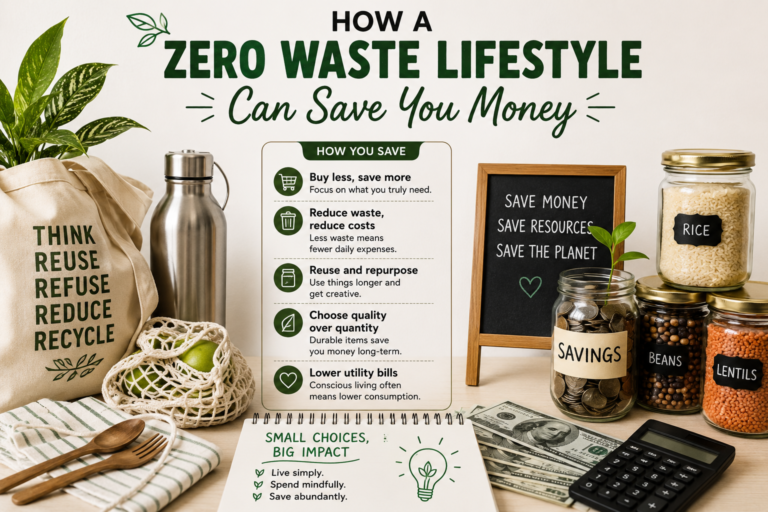
By reusing products and avoiding unnecessary purchases, households can significantly cut expenses. Buying less and using items longer leads to financial savings over time.
3. Healthier Living
Zero waste encourages the use of natural and non-toxic products, which improves overall health and reduces exposure to harmful chemicals.
4. Resource Conservation
It reduces the demand for raw materials, helping conserve natural resources and energy.
The 5 Principles of a Zero Waste Lifestyle
The foundation of a zero waste lifestyle is built on the famous 5 R’s:
Refuse
Say no to unnecessary items like plastic bags, straws, and promotional products.
Reduce
Limit consumption and avoid buying things you don’t need.
Reuse
Use reusable products such as cloth bags, bottles, and containers.
Recycle
Recycle materials responsibly when reuse is not possible.
Rot (Compost)
Compost organic waste to reduce landfill impact and create nutrient-rich soil.
How to Start a Zero Waste Lifestyle
Starting a zero-waste lifestyle doesn’t require drastic changes. Small steps can lead to significant results over time.
1. Conduct a Waste Audit
Analyze your daily waste to identify areas where you can reduce consumption.
2. Switch to Reusable Products
Replace disposable items with reusable alternatives like:
- Stainless steel water bottles
- Cloth shopping bags
- Glass containers
3. Shop Smart
Choose products with minimal or no packaging. Buying in bulk can also reduce waste.
4. Avoid Single-Use Plastics
Single-use plastics are one of the biggest contributors to environmental pollution. Eliminating them is a key step.
5. Compost Organic Waste
Food waste can be composted instead of being sent to landfills, reducing methane emissions.
The Zero Waste Lifestyle at Home
Your home is the best place to start your zero waste journey.
Kitchen
- Store food in reusable containers
- Buy fresh, unpackaged produce
- Compost leftovers
Bathroom
- Use bamboo toothbrushes
- Switch to refillable toiletries
- Avoid disposable wipes
Cleaning
- Use natural cleaning products
- Make DIY cleaners using vinegar and baking soda
Common Challenges and How to Overcome Them
1. Convenience
Many people find it easier to use disposable products. Start gradually and build sustainable habits.
2. Availability
zerowaste.com options may not be available everywhere. Focus on what you can control and make the best choices possible.
3. Cost Misconception
While some eco-friendly products may seem expensive initially, they save money in the long run by lasting longer.
Tips for Maintaining a ZeroWasteLifestyle.com
- Plan your purchases carefully
- Carry reusable items when traveling
- Repair instead of replacing items
- Support eco-friendly brands
- Educate others and spread awareness
Consistency is key. Even small efforts can make a big difference when practiced daily.
Impact of a Zero Waste Lifestyle
Adopting a zero waste contributes to:
- Reduced landfill waste
- Lower greenhouse gas emissions
- Cleaner oceans and ecosystems
- Sustainable economic growth
Globally, reducing waste can significantly decrease pollution and conserve resources for future generations.
Conclusion
A the waste lifestyle is not about perfection—it’s about progress. By making mindful choices and reducing waste step by step, we can all contribute to a healthier planet. Whether you start by refusing plastic bags or composting food waste, every action counts.
Embrace the journey toward sustainability today and inspire others to follow. Together, we can build a cleaner, greener future.
FAQs
1. Is a zero waste lifestyle realistic?
Yes, it is achievable with gradual changes and consistent effort.
2. Does zero waste mean no waste at all?
No, it focuses on minimizing waste as much as possible.
3. Can a waste lifestyle save money?
Yes, reusing products and reducing consumption lowers expenses.
4. How long does it take to adopt a zero waste lifestyle?
It varies, but small steps can lead to long-term sustainable habits.