In today’s fast-paced world, Waste has become a silent crisis. From overflowing landfills to polluted oceans, the impact of human consumption is visible everywhere. This growing environmental concern has led many individuals to rethink their habits and adopt a more sustainable way of living. One such approach gaining global attention is the zero waste lifestyle.
But what exactly is a zero-waste lifestyle? Is it realistic? And how can everyday people adopt it without feeling overwhelmed?
This in-depth guide answers all these questions and more. By the end of this article, you’ll have a clear understanding of the zero-waste lifestyle, its principles, benefits, challenges, and practical steps to start your journey today.
What Is a Zero Waste Lifestyle?
A zero waste lifestyle is a way of living that aims to reduce the amount of waste sent to landfills, incinerators, and the environment. The core goal is to design one’s life so that all materials are reused, recycled, composted, or avoided altogether.
Rather than relying on single-use products, people who follow a zero waste lifestyle focus on conscious consumption, long-lasting alternatives, and sustainable choices. The concept goes beyond recycling—it challenges the idea of waste itself.
In simple terms, a zero waste lifestyle means sending as little trash as possible to the landfill, ideally none at all.
The Philosophy Behind the Zero Waste Lifestyle
The zero waste lifestyle is rooted in the belief that waste is not inevitable—it’s a design flaw. Many everyday products are created for convenience, not sustainability. By changing how products are designed, consumed, and disposed of, waste can be drastically reduced.
This lifestyle encourages individuals to take responsibility for their consumption habits and make mindful decisions that support environmental health and resource conservation.
The 5 R’s of a Zero Waste Lifestyle
At the heart of the zero waste lifestyle are the 5 R’s, a framework that guides sustainable living:
1. Refuse
Say no to what you don’t need—plastic bags, straws, flyers, promotional freebies, and excess packaging.
2. Reduce
Minimize what you do need. Buy less, choose quality over quantity, and simplify your lifestyle.
3. Reuse
Opt for reusable alternatives such as cloth bags, refillable bottles, and durable containers.
4. Recycle
Recycle responsibly, understanding local recycling rules and avoiding contamination.
5. Rot (Compost)
Compost organic waste like food scraps and yard waste to return nutrients to the soil.
Following these principles helps build a sustainable and realistic zero waste lifestyle.
Why Is a Zero Waste Lifestyle Important?
Adopting a zero waste lifestyle has far-reaching benefits that extend beyond personal convenience.
Environmental Benefits
- Reduces landfill waste
- Prevents ocean pollution
- Conserves natural resources
- Lowers greenhouse gas emissions
Economic Benefits
- Saves money by reducing unnecessary purchases
- Encourages mindful spending
- Lowers long-term household costs
Health Benefits
- Reduces exposure to harmful chemicals
- Encourages cleaner food and water choices
- Promotes a more intentional lifestyle
Social Benefits
- Supports ethical brands
- Encourages community engagement
- Inspires others to live sustainably
Is a Zero Waste Lifestyle Really Possible?
A common misconception is that a zero waste lifestyle means producing absolutely zero trash. In reality, it’s about progress, not perfection.
Even the most dedicated zero waste advocates acknowledge that completely eliminating waste is nearly impossible in modern society. The true goal is to reduce waste as much as possible and make better choices wherever you can.
Every small step matters.
How to Start a Zero Waste Lifestyle
Transitioning to a zero waste lifestyle doesn’t require drastic changes overnight. Start small and build sustainable habits over time.
Audit Your Trash
Begin by examining what you throw away most often. Common items include:
- Food packaging
- Plastic bottles
- Paper towels
- Disposable food containers
This awareness helps identify areas where change is easiest.
Switch to Reusable Essentials
Some easy swaps include:
- Reusable shopping bags
- Stainless steel water bottles
- Refillable coffee cups
- Cloth produce bags
Buy in Bulk
Bulk stores allow you to purchase only what you need while avoiding excess packaging.
Choose Sustainable Brands
Support companies that prioritize eco-friendly materials, ethical sourcing, and minimal packaging.
Zero Waste Lifestyle in the Kitchen
The kitchen is often the biggest source of household waste. Fortunately, it’s also one of the easiest places to make impactful changes.
Reduce Food Waste
- Plan meals ahead
- Store food properly
- Use leftovers creatively
Compost Food Scraps
Composting transforms organic waste into nutrient-rich soil and keeps it out of landfills.
Ditch Single-Use Plastics
Replace plastic wrap with beeswax wraps, silicone lids, or glass containers.
Cook More at Home
Home-cooked meals reduce packaging waste and promote healthier eating.
Zero Waste Lifestyle in the Bathroom
Bathrooms are filled with disposable products, but simple alternatives make a big difference.
Sustainable Bathroom Swaps
- Bamboo toothbrushes
- Shampoo and conditioner bars
- Refillable soap dispensers
- Reusable cotton rounds
Reduce Packaging Waste
Choose products with recyclable or compostable packaging, or buy in bulk.
Zero Waste Lifestyle in Fashion
Fast fashion is a major contributor to global waste. A zero waste lifestyle encourages mindful clothing choices.
Buy Less, Choose Better
Invest in timeless, high-quality pieces that last longer.
Second-Hand Shopping
Thrift stores, online resale platforms, and clothing swaps reduce demand for new production.
Repair and Upcycle
Mend clothing instead of discarding it. Simple repairs extend garment life significantly.
Zero Waste Lifestyle at Work
Sustainability doesn’t stop at home. You can practice a zero waste lifestyle at work too.
Reduce Office Waste
- Bring reusable lunch containers
- Use refillable pens
- Avoid disposable coffee cups
Go Paperless
Opt for digital documents whenever possible.
Advocate for Change
Encourage your workplace to adopt recycling programs and sustainable practices.
Zero Waste Lifestyle on a Budget
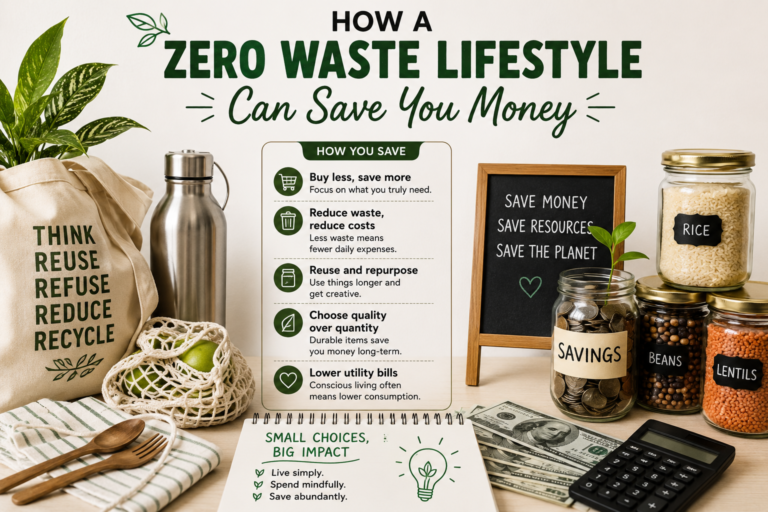
Many people assume a zero waste lifestyle is expensive, but it can actually save money.
Cost-Effective Tips
- Use what you already own
- DIY cleaning products
- Buy second-hand
- Avoid impulse purchases
Sustainability often aligns with frugality.
Common Challenges of a Zero Waste Lifestyle
While rewarding, a zero waste lifestyle does come with challenges.
Limited Access
Not everyone has access to bulk stores or sustainable products.
Social Pressure
Refusing disposables can feel awkward in social settings.
Time and Convenience
Sustainable choices sometimes require more planning.
The key is flexibility—do the best you can with the resources available to you.
Zero Waste Lifestyle Myths Debunked
Myth 1: Zero Waste Means Zero Trash
Reality: It means less waste, not perfection.
Myth 2: It’s Only for the Wealthy
Reality: Many zero waste practices save money.
Myth 3: One Person Can’t Make a Difference
Reality: Collective small actions create large impacts.
How Zero Waste Lifestyle Helps Fight Climate Change
Waste management contributes significantly to greenhouse gas emissions. By reducing waste, a zero waste lifestyle:
- Lowers methane emissions from landfills
- Reduces energy used in manufacturing
- Conserves raw materials
Every sustainable choice helps protect the planet.
Teaching Kids a Zero Waste Lifestyle
Children are natural learners and adapt quickly to sustainable habits.
Simple Ways to Teach Kids
- Encourage reusable lunch boxes
- Involve them in composting
- Teach mindful consumption
Raising eco-conscious kids builds a sustainable future.
Zero Waste Lifestyle and Minimalism
Minimalism and zero waste living go hand in hand. Both emphasize intentional living and reducing excess.
When you own less, you waste less. When you waste less, you live more intentionally.
The Role of Community in Zero Waste Living
Community support makes a zero waste lifestyle easier and more enjoyable.
Community Actions
- Local swap events
- Repair cafés
- Sustainability workshops
Shared efforts amplify impact.
Digital Tools That Support a Zero Waste Lifestyle
Technology can support sustainable living.
Helpful Tools
- Waste-tracking apps
- Sustainable shopping guides
- Local recycling directories
Use digital solutions to stay informed and motivated.
Zero Waste Lifestyle Success Stories
People worldwide are proving that a zero waste lifestyle is achievable.
From families producing a single jar of trash per year to businesses adopting circular models, real-world examples show that change is possible.
Future of the Zero Waste Lifestyle
As environmental awareness grows, the zero waste lifestyle is becoming more mainstream. Governments, businesses, and individuals are embracing sustainability through:
- Eco-friendly packaging
- Circular economies
- Sustainable innovation
The future points toward less waste and more responsibility.
Final Thoughts: Is a Zero Waste Lifestyle Worth It?
A zero waste lifestyle is not about being perfect—it’s about being conscious. Every reusable bag, every refused plastic straw, and every composted scrap contributes to a healthier planet.
By adopting even a few zero waste practices, you reduce your environmental footprint and inspire others to do the same.
The journey toward a zero waste lifestyle begins with one small choice. Start today—and let your actions shape a more sustainable tomorrow.
FAQs About Zero Waste Lifestyle
What is a zero waste lifestyle in simple terms?
It’s a way of living that minimizes waste by reusing, recycling, composting, and refusing unnecessary items.
How to Living a zero-waste lifestyle in 2026 is hard to maintain.
It can be challenging at first, but small steps make it manageable and rewarding.
Can beginners adopt a zero waste lifestyle?
Yes. Start with simple swaps and build habits gradually.
Does a zero waste lifestyle save money?
Often yes, by reducing unnecessary purchases and focusing on reusables.