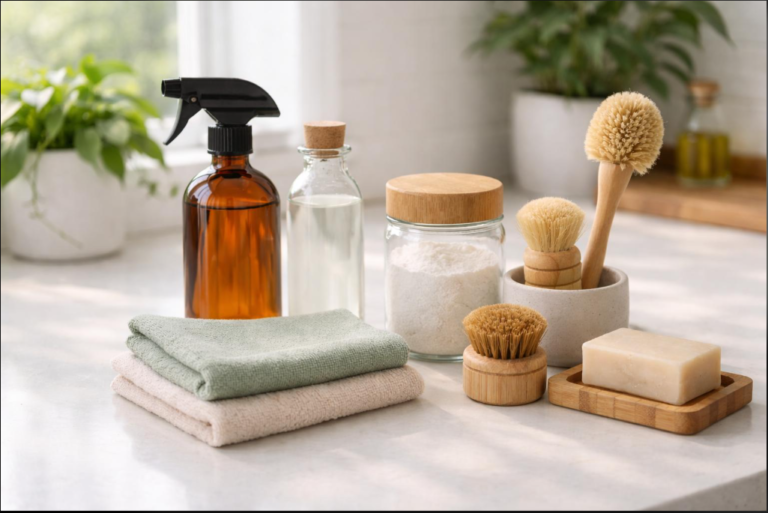
Cleaning is essential to maintaining a comfortable, healthy home. However, traditional cleaning routines can generate unnecessary waste through disposable wipes, plastic bottles, excessive packaging, and frequently replaced cleaning products.
Zero-waste cleaning offers a more sustainable approach. It focuses on reducing disposable materials, choosing reusable cleaning supplies, avoiding unnecessary purchases, and selecting suitable cleaning products with less packaging.
You do not need to replace every cleaning product in your home to get started. Simple changes, such as using washable cloths, refilling cleaning bottles, and choosing durable cleaning tools, can help reduce household waste.
Whether you clean a small apartment or a large family home, these practical zero-waste kitchen tips can help you keep your space tidy while making more environmentally responsible choices.
What Is Zero-Waste Cleaning?
Zero-waste cleaning is an approach to household cleaning that aims to minimize unnecessary waste throughout the cleaning process.
It encourages people to use durable products, reduce single-use materials, choose appropriate lower-waste cleaning solutions, and purchase only what they need.
Common zero-waste cleaning practices include:
- Using washable cleaning cloths instead of disposable wipes.
- Choosing refillable cleaning bottles.
- Reducing unnecessary plastic packaging.
- Buying durable cleaning brushes.
- Using reusable mop pads.
- Following product instructions to avoid excessive use.
- Repairing or reusing suitable household cleaning tools.
The goal is to reduce plastic waste at home while maintaining effective household hygiene.
Why Should You Choose Zero-Waste Cleaning?
Changing your cleaning routine can provide several environmental and practical benefits.
1. Reduce Single-Use Plastic Waste
Many cleaning products come in plastic-free bathroom swaps containers that are discarded after use.
Refillable bottles, concentrated products, and suitable packaging alternatives can reduce the number of disposable containers your household purchases.
2. Reduce Disposable Cleaning Materials
Paper towels, disposable wipes, and single-use mop pads can create recurring waste.
Washable cloths, reusable mop pads, and durable cleaning brushes can often perform similar tasks while being used repeatedly.
3. Save Money Over Time
Reusable cleaning tools may reduce repeated purchases of disposable products.
However, savings depend on product quality, durability, and how often you use them.
4. Encourage Responsible Consumption
A zero waste lifestyle guide to cleaning encourages you to use products carefully rather than buying multiple unnecessary cleaners.
It also helps you identify which cleaning supplies are genuinely useful for your household.
5. Support Sustainable Household Habits
Cleaning is a regular activity, making it an excellent opportunity to develop environmentally responsible habits.
Small changes can gradually become part of your everyday routine.
15 Practical Zero-Waste Cleaning Tips for Your Home
Here are 15 ways to make your cleaning routine more sustainable without making it complicated.
1. Replace Disposable Wipes With Washable Cloths
Disposable cleaning wipes are convenient, but they can create unnecessary waste.
Consider using washable microfiber cloths, cotton cloths, or other durable cleaning fabrics suitable for the surface.
You can use different cloths for different tasks, such as:
- Kitchen counters.
- Bathroom surfaces.
- Furniture.
- Windows.
- General dusting.
Wash reusable cloths according to their care instructions and keep cloths used for toilets or heavily contaminated surfaces separate from general household cloths.
2. Use Refillable Cleaning Bottles
Instead of repeatedly purchasing complete cleaning bottles, consider refillable containers where appropriate.
You can purchase compatible refill solutions or concentrates and prepare them according to the manufacturer’s instructions.
Choose bottles that:
- Are durable and easy to clean.
- Have clearly labeled contents.
- Are suitable for the cleaning solution.
- Include secure spray mechanisms.
Never reuse a food or beverage bottle for cleaning chemicals. Always label cleaning containers clearly and keep them away from children and pets.
3. Choose Cleaning Products With Less Packaging
Packaging is an important consideration when selecting household cleaning products.
Where suitable alternatives are available, look for:
- Refill pouches.
- Concentrated cleaning products.
- Reusable containers.
- Recyclable packaging accepted locally.
- Products sold in larger refill formats that your household can use safely.
Do not assume that a product is environmentally friendly simply because its packaging uses green colors or natural-looking designs. Check the actual product information.
4. Use Microfiber Cloths Responsibly
Microfiber cloths are useful for removing dust and cleaning many household surfaces.
They can often be used with little or no cleaning solution, depending on the task and surface.
However, synthetic microfiber materials can release tiny plastic fibers during washing.
To reduce this impact:
- Use cloths for as long as they remain effective.
- Wash only when necessary.
- Follow care instructions.
- Consider a suitable microfiber-catching laundry device.
- Explore durable natural-fiber alternatives where appropriate.
Choose cleaning materials according to the job rather than assuming one fabric is best for everything.
5. Reduce Paper Towel Consumption
Paper towels are useful for certain cleaning tasks, but using them for every spill or surface can create unnecessary waste.
Keep washable cloths available for everyday cleaning.
You can use reusable towels for:
- Drying counters.
- Cleaning kitchen surfaces.
- Wiping furniture.
- Drying hands in suitable household areas.
Keep separate cleaning materials for raw meat juices, bodily fluids, and other potentially contaminated spills. Follow appropriate hygiene procedures rather than relying on ordinary reusable cloths for every situation.
6. Choose Durable Cleaning Brushes
Low-quality cleaning brushes often need frequent replacement.
Consider durable brushes with replaceable heads or handles made from materials suited to long-term use.
Useful options include:
- Dish brushes.
- Bottle brushes.
- Scrubbing brushes.
- Tile-cleaning brushes.
- Grout brushes.
Choose brushes that are easy to clean and dry properly after use.
7. Make Better Use of What You Already Own
You do not need a completely new collection of eco-friendly cleaning products.
Look around your home for items that can be safely reused.
For example:
- Old cotton clothing can become cleaning rags.
- Suitable jars can organize cleaning accessories.
- Durable containers can store washable cloths.
- Existing buckets can be reused for appropriate cleaning tasks.
Avoid using containers that previously held hazardous substances or materials that may contaminate cleaning supplies.
8. Buy Concentrated Cleaning Products
Concentrated cleaning products may reduce packaging and transportation requirements because they contain less water than ready-to-use alternatives.
However, they must be diluted correctly.
Always:
- Follow the manufacturer’s dilution instructions.
- Use the recommended amount.
- Label prepared solutions.
- Avoid mixing different products.
- Store chemicals securely.
Using more concentrated product than recommended does not necessarily improve cleaning performance.
9. Use Baking Soda for Suitable Cleaning Tasks
Baking soda can be useful for certain household cleaning tasks.
It may help with mild scrubbing, deodorizing, and removing some surface dirt.
Possible uses include:
- Cleaning suitable sinks.
- Freshening certain washable surfaces.
- Removing some light stains.
- Deodorizing appropriate household areas.
Test it on a small, hidden area first. Baking soda can scratch delicate finishes, so avoid using it on surfaces that may be damaged by abrasives.
10. Use Vinegar Carefully and Only Where Appropriate
White vinegar is sometimes used for household cleaning because its acidity can help dissolve certain mineral deposits.
It may be suitable for some tasks, such as cleaning certain glass surfaces or removing light mineral buildup.
However, vinegar is not appropriate for every material.
Avoid using it on:
- Natural stone such as marble and limestone.
- Some sensitive grout and finishes.
- Surfaces for which the manufacturer advises against acidic cleaners.
Important safety warning: Never mix vinegar with chlorine bleach. This can release toxic chlorine gas. Never mix cleaning products unless their labels specifically instruct you to do so.
11. Choose Reusable Mop Pads
Disposable floor-cleaning pads can generate recurring household waste.
Reusable mop pads are an alternative for many floor-cleaning systems.
Look for washable pads that are compatible with your mop and suitable for your floor type.
After use, wash and dry them according to the manufacturer’s instructions.
12. Clean Regularly to Prevent Heavy Buildup
Regular light cleaning can reduce the need for excessive cleaning products and intensive scrubbing.
For example:
- Wipe kitchen counters after food preparation.
- Remove bathroom moisture where practical.
- Clean spills promptly.
- Dust frequently used surfaces.
- Maintain kitchen appliances according to their instructions.
A consistent cleaning schedule helps prevent dirt and grime from accumulating.
13. Choose Lower-Waste Dishwashing Supplies
Dishwashing is another area where you can reduce unnecessary packaging and disposable products.
Consider:
- Durable dish brushes.
- Reusable cleaning cloths.
- Refillable dishwashing liquid.
- Products with suitable refill options.
- Long-lasting dish racks and storage accessories.
Choose products that are effective and safe for your dishes and household needs.
14. Dispose of Cleaning Products Responsibly
Some cleaning products contain chemicals that should not be poured down drains or disposed of with ordinary household waste.
Read product labels and follow local disposal instructions.
For unwanted or leftover cleaning chemicals:
- Do not mix different products.
- Keep them in their original labeled containers where possible.
- Do not pour hazardous chemicals into drains unless the label or local authority permits it.
- Use designated household hazardous-waste collection services where available.
Proper disposal is an important part of responsible household cleaning.
15. Create a Reusable Cleaning Kit
A reusable cleaning kit makes sustainable cleaning easier.
You can keep these items together in one organized location:
- Washable cleaning cloths.
- A reusable spray bottle.
- A durable cleaning brush.
- A reusable mop pad.
- A suitable bucket.
- Clearly labeled cleaning products.
- Cleaning gloves.
Choose only the items your household needs. Avoid purchasing unnecessary accessories simply to create a zero-waste cleaning kit.
Simple Homemade Cleaning Solutions: What You Should Know
Some people prefer simple household ingredients for selected cleaning tasks.
Baking soda and white vinegar are often discussed as natural cleaning ingredients, but they are not universal replacements for formulated cleaning products.
Keep these points in mind:
Baking soda: It can act as a mild abrasive and may help with certain cleaning and deodorizing tasks. Test it before using it on delicate surfaces.
White vinegar: Its acidity can help with certain mineral deposits, but it may damage natural stone and other sensitive materials.
Water: For some everyday dusting and light cleaning tasks, a damp reusable cloth may be sufficient.
Commercial cleaners: For disinfection, specialized stains, and certain hygiene requirements, use an appropriate product according to its label.
Natural ingredients are not automatically harmless. Never mix cleaning chemicals or homemade solutions without verified safety guidance.
Common Zero-Waste Cleaning Mistakes to Avoid
1. Mixing Cleaning Products
Combining household cleaners can create dangerous chemical reactions.
Never mix bleach with vinegar, ammonia, or other incompatible cleaning products.
2. Replacing Everything at Once
Throwing away functioning cleaning tools simply to purchase new sustainable alternatives creates unnecessary waste.
Use existing supplies until they need replacement.
3. Using the Same Cloth for Every Surface
Kitchen, bathroom, and toilet cleaning require appropriate hygiene practices.
Use separate cloths and cleaning tools for different areas, and wash them correctly.
4. Using Natural Ingredients on Every Surface
Vinegar, baking soda, and other household ingredients may damage certain finishes.
Always check surface-care instructions and test products in a small area.
5. Buying More Products Than Necessary
A large collection of cleaning products can increase packaging waste and clutter.
Start with a few versatile, appropriate products rather than buying every item marketed as eco-friendly home ideas.
How to Start Zero-Waste Cleaning on a Budget
You can make your cleaning routine more sustainable without spending a lot of money.
Try these affordable changes:
- Reuse suitable old cotton clothing as cleaning rags.
- Wash and reuse durable cleaning cloths.
- Carry on using existing cleaning bottles where appropriate.
- Purchase refill products when they offer good value.
- Avoid unnecessary disposable wipes.
- Repair or replace only damaged cleaning tools.
- Use the correct amount of cleaning solution.
- Choose products that last longer.
The best starting point is to reduce waste from the supplies you already use.
Frequently Asked Questions About Zero-Waste Cleaning
1. What is zero-waste cleaning?
Zero-waste cleaning is a household cleaning approach that aims to minimize disposable products, unnecessary packaging, and avoidable waste through reusable tools and responsible product choices.
2. How can I clean my home without creating waste?
Use washable cloths, reusable mop pads, refillable cleaning bottles, durable brushes, and products with less packaging. Also, purchase only the cleaning supplies you genuinely need.
3. Are natural cleaning products always safe?
No. Natural ingredients can still damage surfaces or cause harmful reactions when mixed with other chemicals. Follow safety instructions and never mix cleaning products without verified guidance.
4. Can I use vinegar for all household cleaning?
No. Vinegar may help with certain mineral deposits and suitable surfaces, but it can damage natural stone and some finishes. Check surface-care instructions before using it.
5. Are reusable cleaning cloths better than disposable wipes?
Reusable cloths can reduce recurring waste when they are durable and washed appropriately. Their overall environmental impact also depends on material, washing, lifespan, and frequency of use.
6. How can I reduce plastic waste from cleaning products?
Choose refillable bottles, concentrated products, suitable refill systems, and durable cleaning tools. Follow local recycling instructions for packaging that cannot be reused.
7. Is baking soda useful for household cleaning?
Baking soda can help with some mild scrubbing and deodorizing tasks. However, it is abrasive and may scratch sensitive surfaces, so test it first.
8. What should a zero-waste cleaning kit include?
A basic kit may include washable cloths, a reusable spray bottle, a durable brush, a bucket, reusable mop pads, and a few suitable cleaning products. Choose supplies according to your household’s actual needs.
Final Thoughts
Zero-waste cleaning is about reducing unnecessary waste while maintaining a clean and hygienic home. You can begin with simple changes such as replacing disposable wipes with washable cloths, using refillable bottles, choosing durable brushes, and purchasing fewer unnecessary cleaning products.
You do not need to replace every household supply immediately. Start by using what you already own, identify where waste is generated, and gradually introduce reusable alternatives.
With consistent habits and responsible product choices, you can make your cleaning routine more sustainable without making it complicated.