Composting is one of the simplest ways to make your zero waste lifestyle guide more sustainable. Every day, households throw away food scraps, fruit peels, vegetable leftovers, coffee grounds, and other organic materials. Instead of sending all these materials to landfills, you can turn many of them into nutrient-rich compost.
Learning how to start composting at home does not require a large garden, expensive equipment, or professional gardening experience. You can begin with a small compost bin, a suitable collection of organic materials, and a little patience.
Whether you live in an apartment or a house with outdoor space, there is a composting method that may work for your situation.
In this beginner-friendly guide, you will learn what composting is, which materials you can use, how to choose a composting method, and how to avoid common mistakes.
What Is Composting?
Composting is a natural process in which microorganisms, fungi, and other organisms break down organic materials into a dark, soil-like substance called compost.
Compost contains organic matter and nutrients that can improve soil structure, support plant growth, and help the soil retain moisture.
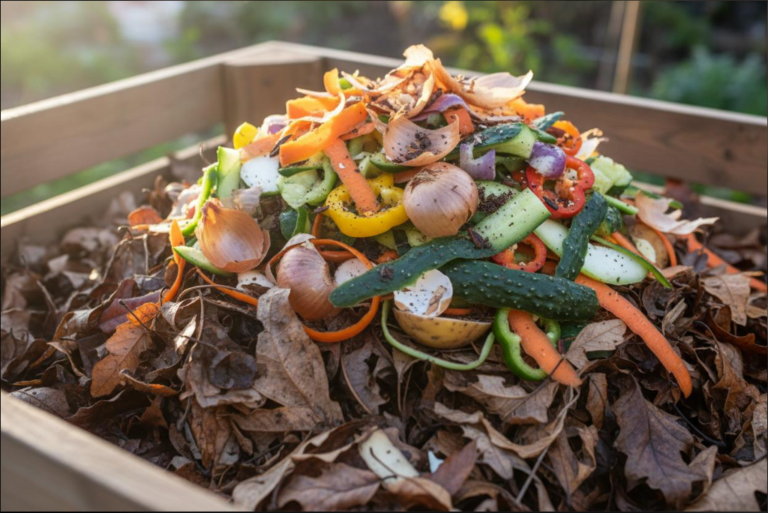
Common materials used for composting include:
- Fruit and vegetable scraps
- Dry leaves
- Grass clippings
- Coffee grounds
- Tea leaves
- Shredded cardboard
- Small amounts of untreated paper
Composting is an effective way to manage suitable organic zero waste swaps for beginners while creating something useful for gardens and plants.
Why Should You Start Composting at Home?
Before setting up a compost system, it helps to understand why composting is worth considering.
1. Reduce Household Food Waste
Food scraps make up a significant portion of household 5 Rs of zero waste. Composting suitable leftovers gives organic materials another purpose instead of sending them directly to the trash.
You can collect vegetable peels, fruit scraps, and other acceptable materials in a dedicated container.
2. Improve Soil Quality
Finished compost adds organic matter to soil. It can improve soil structure, support beneficial soil organisms, and help sandy or compacted soils manage water more effectively.
Mixing mature compost into garden beds can also support healthier growing conditions.
3. Reduce the Need for Some Garden Products
Compost can provide nutrients and improve soil health, potentially reducing your need for certain commercial soil amendments.
However, compost is not always a complete fertilizer. Different plants have different nutrient requirements, so you may still need other soil products.
4. Support a Zero-Waste Lifestyle
Composting fits naturally into zero-waste kitchen tips. It gives suitable organic materials another purpose and encourages more thoughtful food consumption.
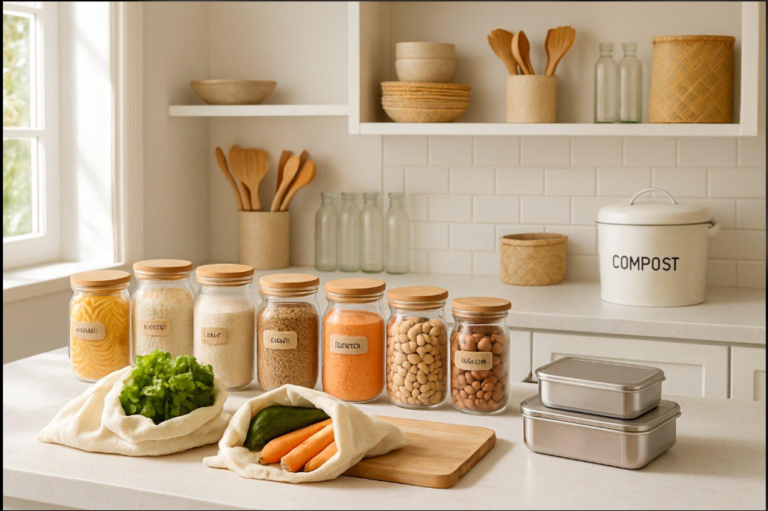
It also works well alongside other habits, such as meal planning, reusable food storage, and reducing unnecessary packaging.
5. Make Gardening More Sustainable
If you grow flowers, herbs, or vegetables, finished compost can become a useful part of your gardening routine.
It supports soil health and helps return organic matter to the growing environment.
How to Start Composting at Home: 7 Simple Steps
You do not need to make everything complicated when beginning. Follow these steps to establish a basic composting system.
Step 1: Choose the Right Composting Method
Start by considering your available space, household size, and the materials you want to compost.
Here are four common methods:
Backyard composting: A traditional compost pile or outdoor bin works well when you have garden space. You can combine suitable food scraps with dry leaves, shredded cardboard, and other organic materials.
Compost tumbler: A compost tumbler is a rotating container that makes mixing materials easier. It can be useful for households with outdoor space, although capacity and composting speed depend on the design and conditions.
Worm composting: Also called vermicomposting, this method uses composting worms to process suitable organic materials. It can work indoors or outdoors when the system is properly maintained.
Bokashi composting: Bokashi uses microorganisms to ferment food scraps in a sealed container. It can handle some materials that traditional compost systems generally avoid, but the fermented material usually needs further processing in soil or a suitable compost system.
Choose a method that matches your home rather than buying equipment you may not need.
Step 2: Select a Suitable Compost Bin
Your compost bin should match your chosen method.
For outdoor composting, you can use a purpose-built compost bin or a suitable open compost area. For indoor systems, select a container designed for worm composting or bokashi.
A good compost container should:
- Be suitable for the chosen composting method.
- Allow appropriate airflow when the method requires it.
- Be easy to access and maintain.
- Have enough capacity for your household.
- Help prevent pests from reaching the materials.
Avoid placing ordinary food scraps in an airtight container for traditional aerobic composting. Airflow is important for this method.
Step 3: Understand Green and Brown Materials
Traditional composting works best when you balance two broad categories of materials.
Green materials are generally moist and rich in nitrogen.
Examples include:
- Fruit and vegetable scraps
- Fresh grass clippings
- Coffee grounds
- Fresh plant trimmings
Brown materials are generally dry and rich in carbon.
Examples include:
- Dry leaves
- Shredded cardboard
- Untreated paper
- Small twigs
- Straw
Both categories are important. Too many wet green materials can create unpleasant smells, while too many dry brown materials can slow decomposition.
A practical starting point is to add roughly two to three parts brown material by volume for every one part green material, then adjust according to moisture and how the pile behaves. This is a starting guide, not a strict scientific formula.
Step 4: Prepare Your Organic Materials
Cutting larger scraps into smaller pieces can help them break down more quickly.
For example:
- Chop large vegetable scraps into smaller pieces.
- Tear cardboard into small sections.
- Break dry leaves into manageable pieces.
- Avoid adding large amounts of one material at a time.
For a traditional compost pile, cover fresh food scraps with a layer of brown materials. This helps manage moisture, ways to reduce plastic waste odours, and makes the pile less attractive to pests.
Always check the accepted materials for your specific composting system.
Step 5: Maintain the Right Moisture Level
Moisture is essential for traditional composting because microorganisms need water to break down organic matter.
Your compost should generally feel like a wrung-out sponge: moist but not dripping wet.
If the mixture is too dry, decomposition may slow down. Add a little water and mix it through.
If it is too wet, add dry brown materials such as shredded cardboard or dry leaves. Improve airflow if necessary.
Do not allow your compost to become waterlogged.
Step 6: Turn or Mix Your Compost When Needed
Traditional aerobic compost piles need oxygen. Turning or mixing the material helps distribute air and moisture throughout the pile.
You can use a garden fork or compost aerator to mix the materials.
How often you turn compost depends on your system and goals. More frequent turning can sometimes speed decomposition, but it is not essential for every home composting setup.
Worm bins and bokashi systems follow different maintenance routines, so do not treat them like ordinary outdoor compost piles.
Step 7: Wait for Your Compost to Mature
Composting takes time. The process may take several weeks to several months, depending on the method, materials, temperature, moisture, and maintenance.
Finished traditional compost is generally:
- Dark brown and crumbly.
- Earthy-smelling rather than unpleasant.
- Difficult to recognize by its original ingredients.
- Relatively cool compared with an actively decomposing pile.
Allow compost to mature before using it around plants. If it still smells unpleasant or contains recognizable food scraps, it may need more time.
What Can You Put in a Home Compost Bin?
The materials accepted by your compost system depend on the method you use. The following table is a general guide for traditional home composting.
| Material | Traditional composting |
| Fruit and vegetable scraps | Usually suitable |
| Dry leaves | Suitable |
| Coffee grounds | Suitable |
| Tea leaves | Suitable |
| Shredded plain cardboard | Suitable |
| Untreated paper | Usually suitable in moderation |
| Fresh grass clippings | Suitable in moderation |
| Meat and fish | Avoid in basic home piles |
| Dairy products | Avoid in basic home piles |
| Cooking oil and grease | Avoid |
| Pet waste | Avoid in ordinary home compost |
| Chemically treated wood | Avoid |
Some specialized systems, including certain hot composting and bokashi setups, may accept additional materials. Follow the instructions for your specific system and local composting rules.
How to Compost at Home Without a Garden
Living in an apartment does not mean you cannot compost.
You can explore these options:
1. Try Vermicomposting
A properly maintained worm bin can fit into a small indoor or sheltered outdoor space.
Composting worms process suitable food scraps and produce worm castings, which can be used as a soil amendment.
Keep the bin in a suitable temperature range, provide appropriate bedding, and avoid overfeeding.
2. Use a Bokashi Bucket
A bokashi bucket is a compact system that ferments food scraps in a sealed container.
It can be useful for apartment residents because it does not rely on an open compost pile. However, the fermented material is not finished traditional compost and generally needs to be buried in soil or processed further.
3. Find a Community Composting Program
If maintaining a home system is not practical, look for a local community garden, municipal composting program, or food-waste collection service.
These programs may accept organic materials that are unsuitable for your home composting setup.
4. Start With a Small Collection Routine
You do not need to collect every possible food scrap.
Begin by separating fruit and vegetable scraps in a dedicated container. Transfer them regularly to your chosen composting system or an appropriate collection service.
Common Composting Problems and How to Fix Them
Beginners sometimes experience problems when maintaining a compost system. Most issues can be improved by adjusting moisture, airflow, or the materials being added.
Problem 1: Compost Smells Bad
A strong rotten or unpleasant smell often indicates excess moisture, poor airflow, or too many nitrogen-rich materials.
Solution: Add dry brown materials, mix the pile to improve airflow, and avoid adding too many wet food scraps at once.
Problem 2: Compost Is Too Dry
A dry pile may decompose slowly because microorganisms do not have enough moisture.
Solution: Add water gradually and mix the materials. Aim for the moisture level of a wrung-out sponge.
Problem 3: Flies or Pests Appear
Exposed food scraps may attract insects or animals.
Solution: Bury or cover food scraps with brown materials, secure the bin, and avoid adding meat, dairy, or oily foods to a basic home compost pile.
Problem 4: Compost Is Not Breaking Down
Large materials, low moisture, poor airflow, or unsuitable temperatures can slow the process.
Solution: Cut materials into smaller pieces, check moisture, and mix the pile when appropriate.
Problem 5: Too Much Liquid Collects
Excess liquid can indicate that the compost system is too wet.
Solution: Add dry brown materials and check drainage and airflow. If you use a worm bin, make sure it is not being overwatered.
How to Use Finished Compost in Your Garden
Once your compost is mature, you can use it in several ways.
Improve garden soil: Mix mature compost into garden beds to increase organic matter and improve soil structure.
Support potted plants: Blend a suitable amount of mature compost into potting mixes, rather than filling pots with pure compost.
Apply around plants: Use compost as a surface amendment around established plants, keeping it away from direct contact with stems.
Prepare garden beds: Add compost before planting to help improve soil conditions.
Remember that compost should be mature before use. Fresh, unfinished material can interfere with plant growth.
5 Composting Mistakes Beginners Should Avoid
If you want to build a successful composting routine, avoid these common mistakes.
- Adding too much food waste: Large quantities of wet scraps can create unpleasant smells and attract pests.
- Ignoring brown materials: Traditional compost piles need a good balance of carbon-rich and nitrogen-rich materials.
- Making the pile too wet: Waterlogged compost can become poorly aerated.
- Using unsuitable materials: Meat, dairy, oils, and pet waste are not appropriate for ordinary beginner compost piles.
- Using compost too early: Unfinished compost may not be suitable for plants.
A consistent routine and a little observation can prevent many of these problems.
Frequently Asked Questions About Composting at Home
1. How do I start composting at home for beginners?
Choose a suitable composting method, select the right container, and collect appropriate organic materials. For traditional composting, balance green materials with brown materials, maintain moisture, and provide airflow.
2. Can I compost in an apartment?
Yes. Vermicomposting and bokashi are two options for people with limited outdoor space. You can also use a local food-waste collection or community composting program.
3. How long does home composting take?
It depends on the composting method, temperature, materials, moisture, and maintenance. Traditional compost can take several weeks to several months or longer to mature.
4. Can I put cooked food in my compost bin?
Basic backyard compost piles generally should not contain cooked food, especially food containing meat, dairy, oil, or sauces. Some specialized systems may accept certain cooked foods, so check the instructions for your method.
5. Does composting attract insects?
A well-maintained compost system should not attract excessive pests. Cover food scraps, manage moisture, and keep unsuitable materials out of the bin.
6. Can I compost without buying a special bin?
Yes. A suitable outdoor compost area can work without an expensive commercial bin. However, indoor systems need an appropriate container to manage moisture, odors, and pests.
7. What is the easiest composting method for beginners?
For people with garden space, a basic outdoor compost bin can be a straightforward starting point. For apartment residents, a small worm bin or bokashi bucket may be more practical.
8. Can I use unfinished compost for plants?
It is better to wait until traditional compost is mature. Unfinished compost may contain recognizable food scraps and can affect plant growth.
Final Thoughts
Starting composting at home is a practical step toward reducing household organic waste and supporting healthier soil. You do not need a large garden or expensive equipment to begin. The right method depends on your available space, household habits, and the materials you want to process.
Start small, separate suitable organic materials, and learn how your composting system works. With consistent care, you can turn many everyday food scraps and garden materials into a useful resource.
Sustainable living does not require changing everything overnight. Small habits, including composting at home, can make a meaningful difference over time.